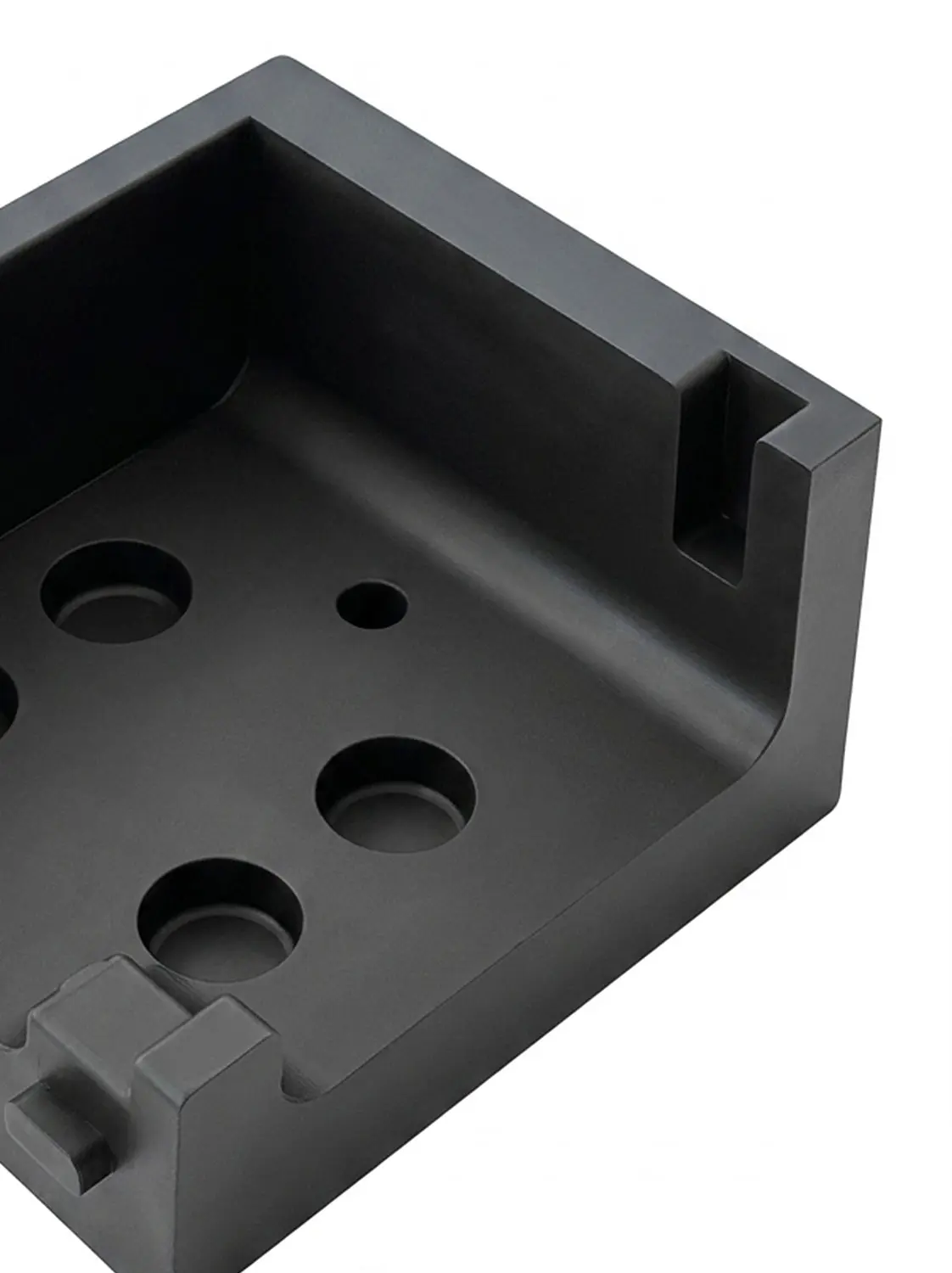
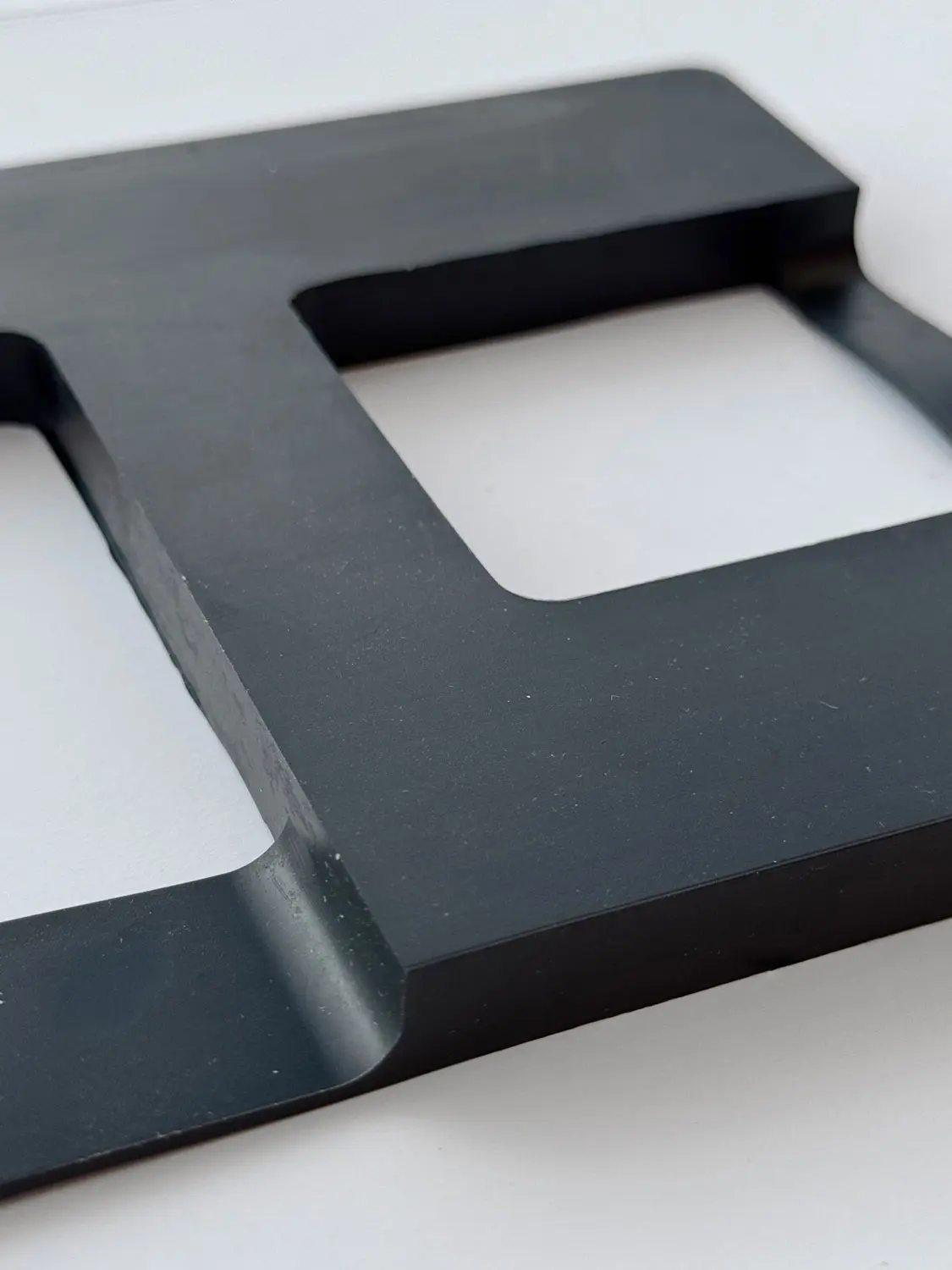
The PVC casting process

How does the casting process work?

In the casting process, liquid PVC plastisol is poured at room temperature into a suitably shaped, open mould. Unlike injection moulding, the material is not injected under high pressure into a closed mould cavity. Instead, the plastisol is poured into the mould and, following heat treatment in an oven, gels to form a solid, rubber-elastic PVC plastic part.

Depending on the type of Covytec® used, a plastisol with the appropriate formulation is processed. On the Overview page for Covytec® models You can view the available material types and download the relevant material data sheet directly.

When the filled mould is heated, the heat passes through the mould wall and the exposed surface of the casting compound into the PVC plastisol. The PVC particles absorb the liquid plasticiser and form a cohesive PVC structure.

As the temperature rises, this process continues until the plastisol has completely set in the mould. The required duration of the heat treatment depends on the temperature of the mould and, in particular, on the thickest part of the moulded component.

Following heat treatment and subsequent cooling, the mould is dismantled and the finished component is removed. Depending on the requirements, it can then undergo further processing.

Why is the casting process particularly suitable for thick-walled components?

The casting process allows for the production of comparatively thick walls, as well as significant variations in wall thickness within a single component. Heat can penetrate the material both via the mould wall and via the exposed surface of the molten metal.

The required duration of the heat treatment depends in particular on the thickest part of the component. This ensures that the plastisol is adequately heat-treated, even where wall thicknesses are greater.

This means that components with widely varying wall thicknesses can be produced in a single mould.

What types of geometry can be produced using the casting process?

The casting process also enables the production of components with more complex geometries. The open mould can be adapted to the desired contour, meaning that, in addition to simple shapes, contours featuring steps, recesses, curves and varying cross-sections can also be produced.

The possibilities offered by geometry are largely determined by the design and demouldability of the mould. Undercuts and other complex mould features can also be accommodated if the mould can be constructed in such a way that the finished component can subsequently be removed.

Key features of the casting process

As the PVC plastisol is introduced into the open mould without pressure during the casting process, air bubbles may form against the mould wall during filling. They are not necessarily dislodged from the surface by the pressure-free filling process. This can affect the finish of the surface, particularly in undercuts and areas that are difficult to access.
The exposed surface of the casting may also exhibit a more irregular structure following heat treatment, due to air bubbles that have risen to the surface. These characteristics are inherent to the process and do not pose a problem for many technical applications, particularly where appearance is not a decisive factor.
Material shrinkage must also be taken into account when designing the moulding tool and determining the plastisol dosage. The quantity of material required for the finished component is therefore calculated with an appropriate allowance added.
Through subsequent machining, the dimensions and fits achieved during casting can be specifically tailored to the component’s requirements. It is also possible to refine the surface finish.

Castings from HAMCO

You now know how the PVC casting process works and what its specific characteristics are. However, the crucial question is whether this manufacturing process is also suitable for your particular component.
Under Castings production Find out how HAMCO produces bespoke castings and assesses the manufacturability of your component.

Contact HAMCO now

Supplier to the industry

Large and small quantity requirements Direct processing

Supplier to the technical trade

Large and small quantity requirements

Note on mandatory fields and data protectionThe mandatory field is marked. All other fields are voluntary. Your data will only be collected and stored electronically strictly for the purpose of processing and answering your enquiry. Information on data processing can be found here: Data protection.