What is the PVC casting process?
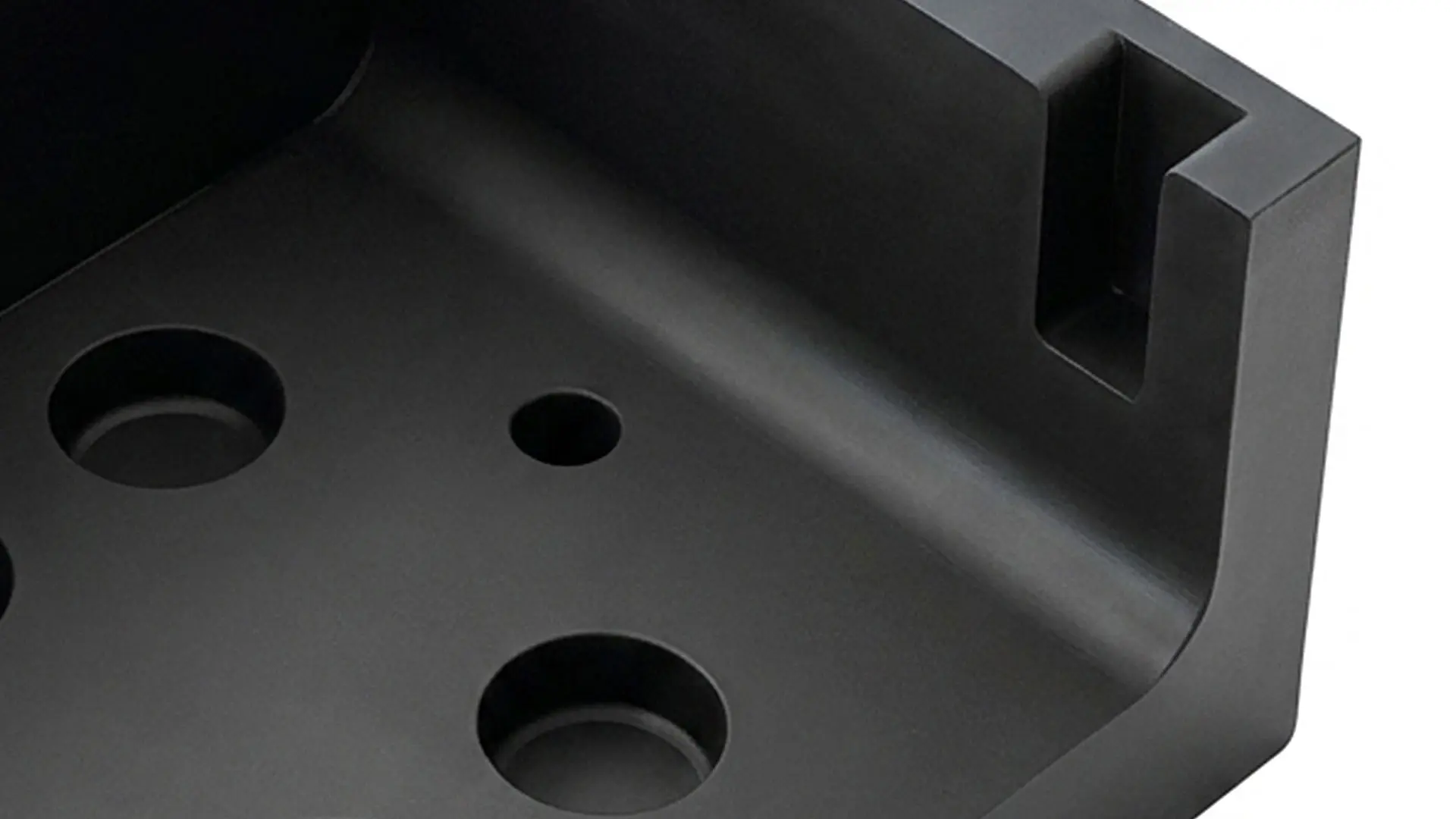
The PVC casting process is a non-pressurised manufacturing process. In this process, liquid PVC plastisol is poured from above into an unheated aluminium mould, which replicates the geometry of the component but does not completely enclose it. The filled mould is then heated in an oven. During the heating process, the so-called Gelling takes place. During this process, the PVC particles finely dispersed in the plastisol are swelled by the plasticisers and bonded together to form a mass that becomes increasingly tough and elastic. The initially liquid mass develops into a homogeneous, solid PVC plastic body. Once gelation is complete, the mould is cooled in a controlled manner. The finished component can then be removed and – if required – trimmed with a deburring knife or, where necessary, machined. Precisely because no injection pressure is required during production, the low shrinkage results in only very low internal stresses within the PVC material.What is the step-by-step casting process?
The entire manufacturing process consists of just a few steps:- Manufacture or preparation of the mould.
- Metered feeding of the liquid PVC plastisol.
- Heat the mould in the oven.
- Gelation and complete curing of the material.
- Allowing the tool to cool down.
- Removing the component from the mould.
- Trim off any burrs that may be present.
Why is this process particularly suitable for thick-walled PVC components?
The greatest strength of the casting process lies in areas where other manufacturing processes reach their limits. In the injection moulding of plastics, large accumulations of material can lead to sink marks, voids or long cooling times. The PVC casting process is not affected by the challenging manufacturing issues associated with premature mass flow, caused by cross-sections of varying sizes when the material is injected into an injection moulding tool. The PVC casting process is ideally suited to solid components and, in some cases, extreme variations in wall thickness, as the material cures evenly during pressureless filling and subsequent gelation. Even significant variations in wall thickness can therefore be achieved without difficulty. This makes the process particularly suitable for:- solid technical moulded parts,
- electrical insulating functional components,
- Spacers and bearing elements,
- Protective elements with significant differences in wall thickness,
What kinds of surfaces are produced during casting?
Moulded PVC components reproduce the surface of the mould with a high degree of precision. Mould surfaces that have undergone machining are reproduced with the corresponding level of finish. However, as the material is processed without pressure, areas not in direct contact with the mould wall often have a slightly uneven surface. This effect is inherent to the process and does not constitute a quality defect. The casting process is therefore less suitable for high-gloss visible parts or decorative surfaces with a grain pattern. On the other hand, those wishing to manufacture technical functional parts will benefit from the other advantages of this manufacturing process.For what production volumes is this process suitable?
The casting process requires significantly longer cycle times than injection moulding. On the other hand, the moulds are much simpler in design and are therefore cheaper to manufacture. The process is particularly cost-effective for:- Very small and small production runs,
- Production batches that are produced only rarely,
- Spare parts,
- Pre-production runs,
- Products with low annual sales volumes.
Casting or injection moulding?
This is a question that many designers ask themselves as early as the development phase of a new product. The answer depends primarily on the geometry, the quantity required and the desired product characteristics.| Casting process | Injection moulding |
| ideal for thick-walled components | ideal for thin-walled components |
| low tooling costs | significant investment in tools |
| cost-effective for small production runs | cost-effective for large production runs |
| uniform material structure | very short cycle times |
| suitable for large variations in wall thickness | ideal for mass production |
What are the typical applications for moulded PVC components?
The PVC casting process is used in many industrial sectors, for example:- Electrical engineering,
- Mechanical engineering,
- Plant engineering,
- Renewable energy.
- Conveyor technology,
- Medical technology,
- Laboratory equipment manufacturing,
What are the advantages of the PVC casting process?
An overview of the key benefits:- ideal for thick-walled PVC components,
- suitable for large variations in wall thickness,
- uniform material structure,
- high-quality casting,
- low tooling costs,
- cost-effective for small production runs,
- good dimensional accuracy,
- easy post-processing,
- a tried-and-tested process for technical functional components.
HAMCO – Your partner for technical PVC moulded parts
The choice of the appropriate manufacturing process is a key factor in determining the quality, cost-effectiveness and delivery reliability of a plastic component. We support our customers right from the product development stage and assess, regardless of the specific process, whether casting, injection moulding or another manufacturing process represents the optimal solution. Thanks to decades of experience in processing PVC using injection moulding, dip coating, coating and casting processes, as well as in-depth expertise in the relevant moulding techniques, we create technically sophisticated plastic solutions that are precisely tailored to each specific application.Conclusion
The PVC casting process is a tried-and-tested manufacturing method for thick-walled engineering plastic components and cost-effective small-batch production. Where thick wall thicknesses, low moulding costs and a uniform material structure are required, this process offers decisive advantages over other manufacturing methods. Selecting the appropriate manufacturing process as early as the development phase often saves on tooling costs, shortens development times and results in a component that is optimally tailored to its intended application.FAQ: PVC casting process
G1 – When is the PVC casting process used rather than injection moulding?
The casting process is particularly suitable for solid plastic parts where injection moulding would be less practical, either economically or technically, due to thick walls, significant variations in wall thickness or low production volumes.
G2 – What materials are used in the casting process?
HAMCO processes high-quality PVC plastisols from the Covytec® range. These are specially tailored to meet the specific requirements in terms of hardness, flexibility and intended application.
G3 – Is the surface of castings just as smooth as that of injection-moulded parts?
Technical tool surfaces are reproduced very well. However, areas not in contact with the tool may have a slightly uneven surface. The process is therefore only of limited suitability for decorative high-gloss surfaces.
G4 – For what production volumes is the PVC casting process cost-effective?
The PVC casting process is particularly cost-effective for small production runs, pre-production runs, spare parts and regularly recurring production orders involving manageable quantities.
G5 – What are the advantages of simple casting moulds?
The production of these moulds is significantly more cost-effective than that of complex injection moulds. This means that even smaller projects can be carried out cost-effectively.