
The honey showed the way.
Have you ever taken a spoon out of a jar of honey?
At first, the honey clings evenly to the spoon. But after just a few seconds, it begins to flow slowly downwards. This creates fine streaks, and the famous last drop eventually collects at the lowest point.
That is exactly how it behaves the plastisol in the manufacture of dip-moulded parts from viscous PVC.
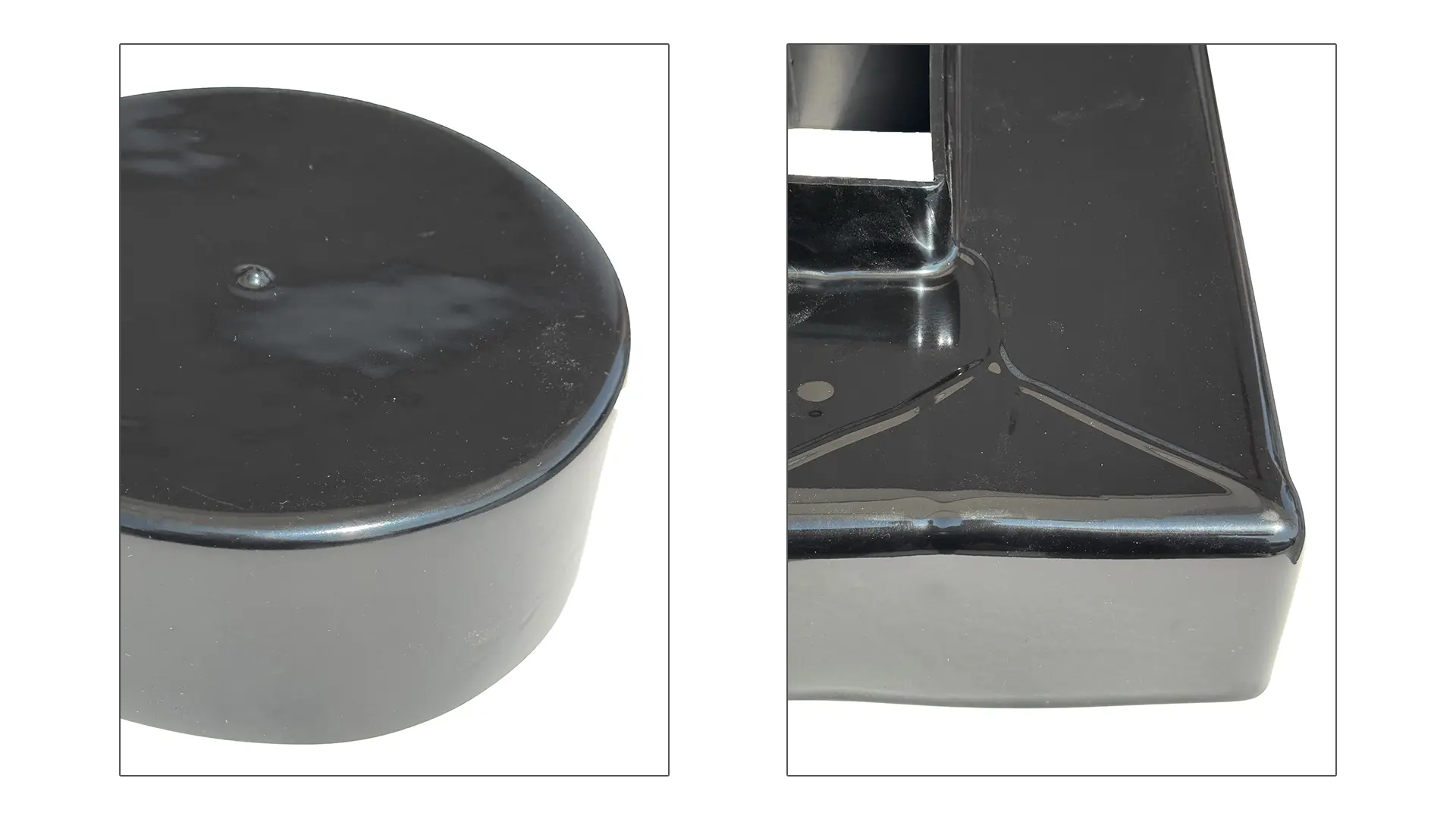
Once the heated dip core has been removed from the PVC dip bath after the product-specific dwell time has elapsed, an even, still-flowable layer of plastisol adheres to the surface of the PVC that has already set, which will form the eventual wall thickness. However, the material remains flowable for a short time until it has fully gelled and set in the hot oven. During this time, the excess PVC – just like honey – follows the laws of gravity.
Depending on the geometry of the part being dipped, visually detectable Traces of runoff result from the PVC sticking to the surface, with slightly more material accumulating at the lowest point and forming a Drip from the drain form.
Neither of these is a manufacturing fault, but rather entirely natural side effects of the PVC dipping process and the result of a law of physics – after all, gravity makes no distinction between honey and plastic.