
When sales take a nosedive
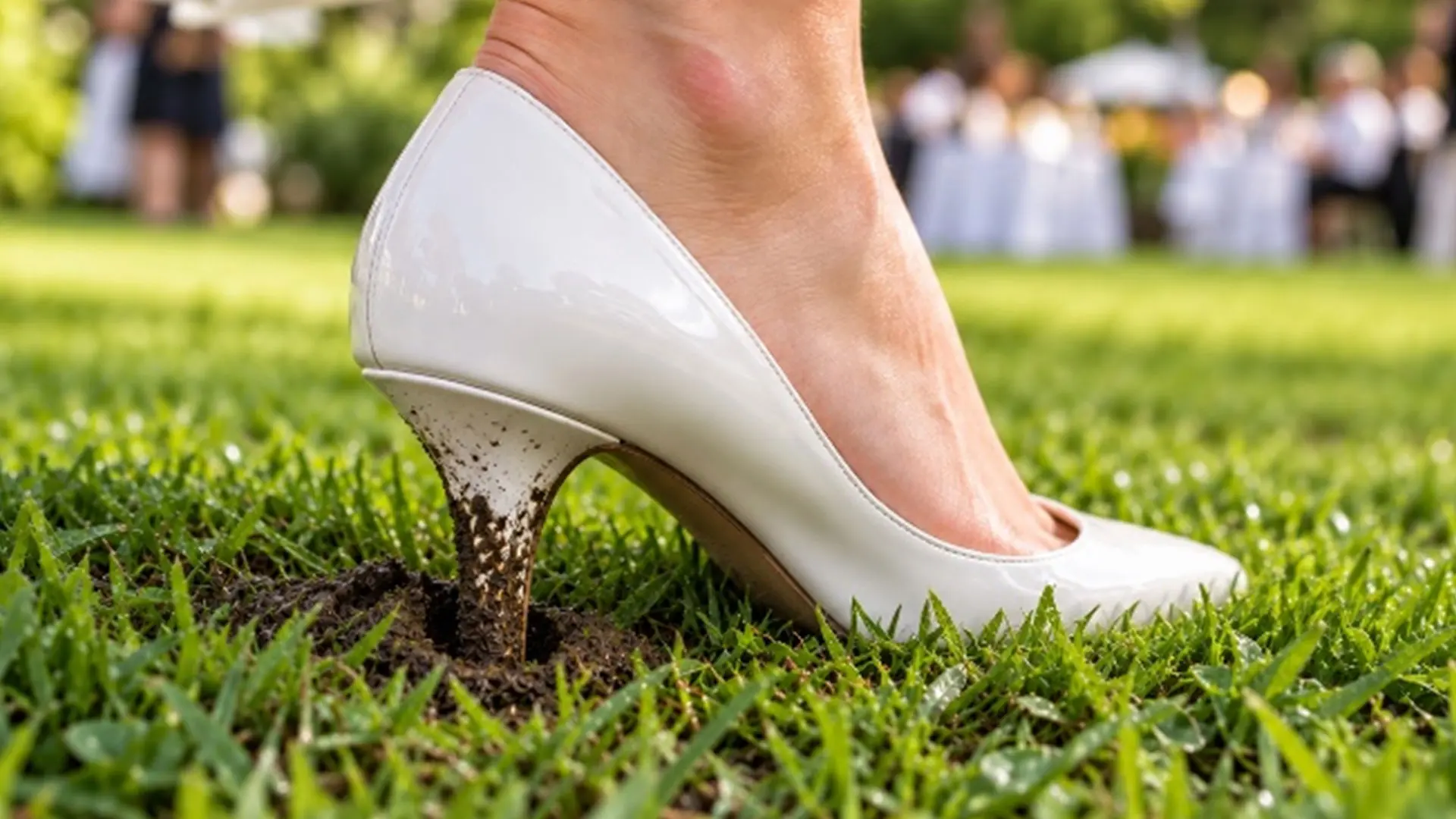
The garden party went a treat. The sun was shining, the guests were in high spirits, and a lady was walking across the well-tended green lawn in elegant high heels. She’d taken into account that her heels might sink in a little as she walked. After all, she didn’t want to miss out on making a stylish entrance.
But then the rain came – brief but heavy. The party was moved indoors for a short while.
The rain shower had cooled the air down nicely. The lady wanted to make the most of the opportunity and went back out into the garden.
What she hadn’t reckoned with, however, was that the grass had become considerably softer due to the rain. Her heels were now sinking much deeper than before, and her elegant stride was in danger of ending in an accidental fall.
Same heel, same weight, same surface – but a different penetration depth.
What does this have to do with soft, elastic plastics?
In the case of soft, elastic materials, hardness can be determined using a standardised indenter. For Covytec® soft PVC materials, the plastisol manufacturer specifies DIN ISO 48-4 for this purpose.
In the Shore A test, a standardised indenter made of hardened steel is pressed onto the surface of the material with a specified test force. It is shaped like a small, truncated cone with a flat tip measuring only about 0.8 mm in diameter. The deeper it penetrates, the lower the measured Shore A hardness value.
Thermoplastic elastomers (TPE) can also be processed to achieve different degrees of hardness. This allows the properties of an elastic plastic component to be tailored specifically to its application.
Whether it’s a stiletto heel or a standardised indenter – how deep it sinks depends on how much the ground gives way.